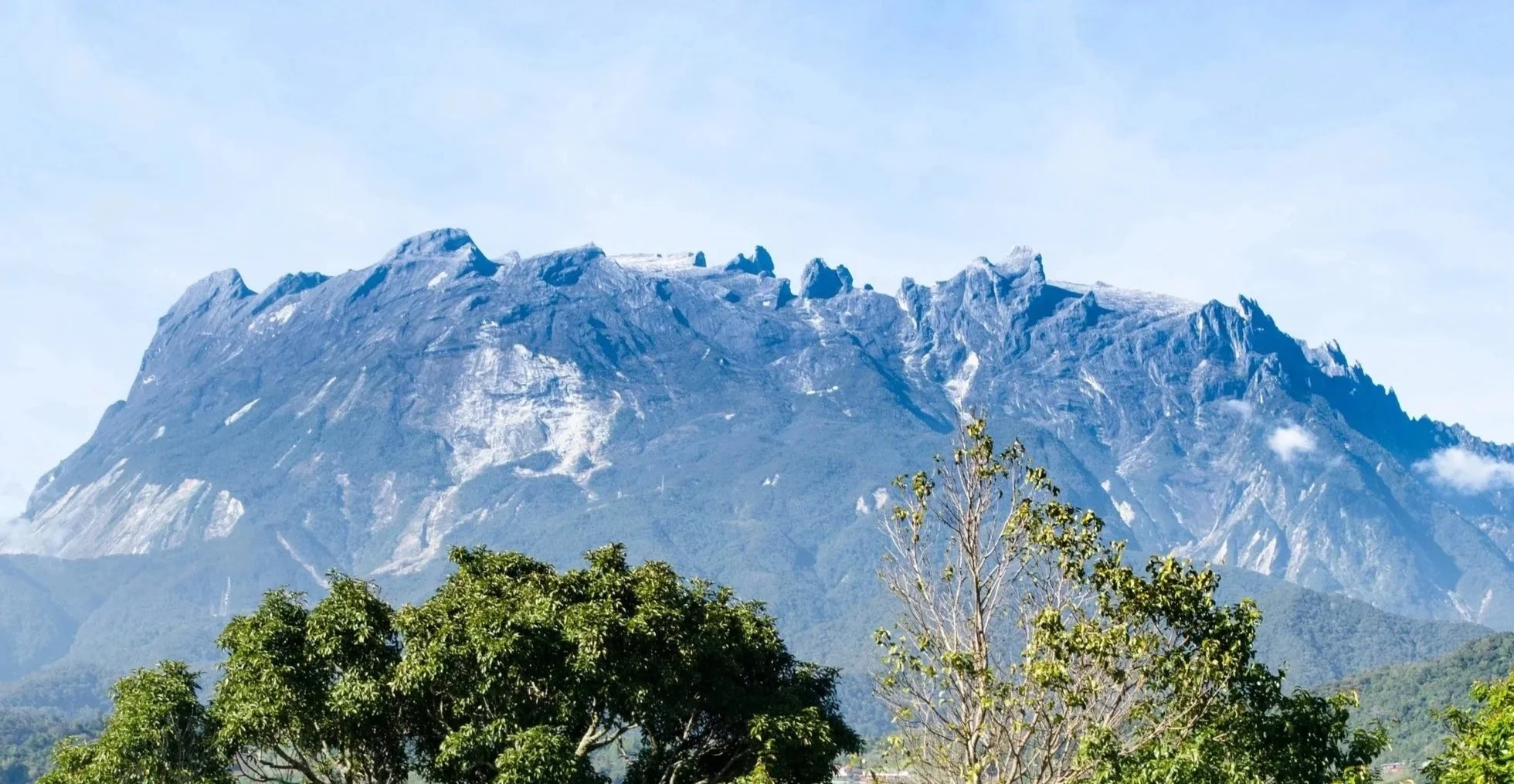
The Region of Borneo
.
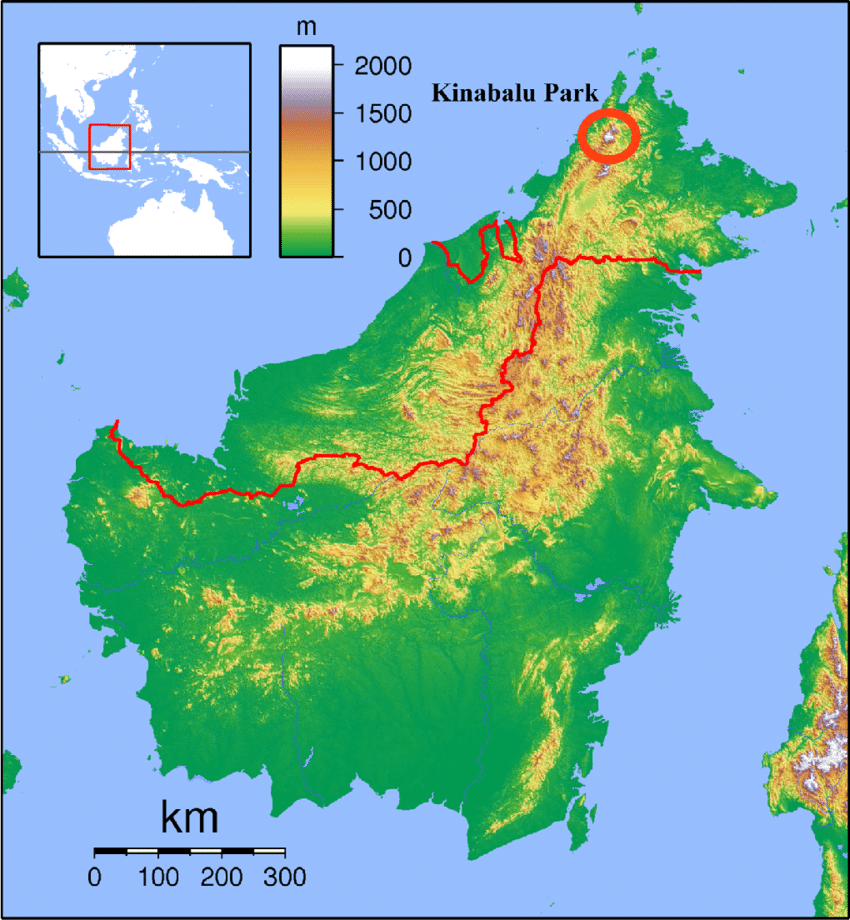
Borneo isn’t just one of the world’s largest tropical islands - it’s also one of the wildest and most biodiverse places on Earth. Picture lush rainforests, mist-covered peaks and dramatic limestone cliffs.
Home to 40 different Nepenthes species, Borneo has fascinated explorers and botanists for centuries. Today it remains the beating heart of Nepenthes diversity where each species shows off its own wonderfully bizarre evolutionary quirks


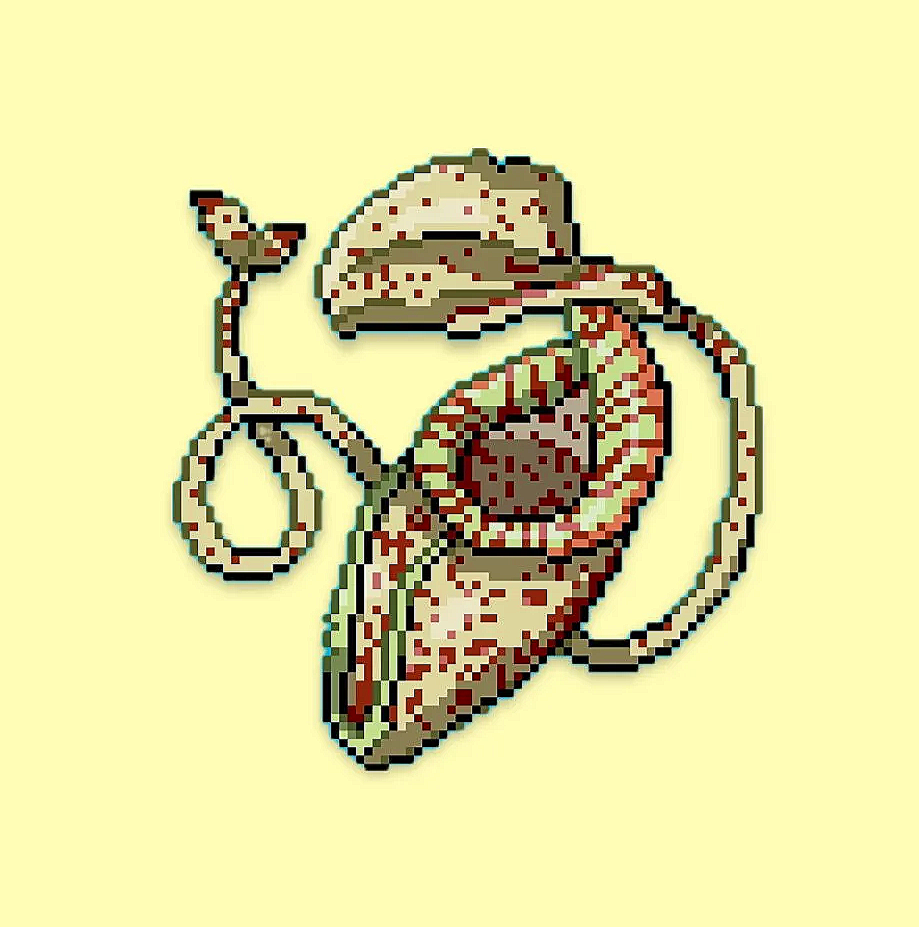
Borneo Dex
-
“The King Pitcher Plant”
Type: Highland
Region: Borneo
Habitat: Mt. Kinabalu & Mt Tambuyukon
Conservation status: Endangered
Entry:
Behold Nepenthes rajah, the undisputed monarch of the pitcher plant kingdom. This classic highland species is endemic to the cloud-covered peaks of Mount Kinabalu and Mount Tambuyukon in Sabah, Borneo where it grows exclusively on nutrient-poor serpentine soils.
Its pitchers are deep red to royal purple, urn-shaped traps that can hold up to 3.5 litres of water and digestive soup. N. rajah is fabled for catching everything from bugs to frogs, lizards and even small mammals such as rats. Each pitcher features an oblique mouth with a broad, wavy peristome connected to an oversized scooped lid adorned with nectar glands that produce a sugary exudate, similar to that produced by famous N. lowii. The peristome serves as a perfect perch for mountain treeshrews & summit rats which engage with a mutualistic exchange of nectar for the chance to deposit their droppings into the pitcher’s waiting mouth - nature’s most majestic toilet.
Distinguishing Characteristics:
Behemoth-sized traps
Urn-shaped pitcher morphology
Peltate leaves
Wavy, broad, serrated peristome
Oversized domed lid with exudate
Massive flower spikes
Dense root system specialised for serpentine soils
Fun facts:
First collected in 1858 by Hugh Low and formally described in 1859 by Joseph Hooker, who named it after James Brooke, the first White Rajah of Sarawak.
Listed as Endangered by the IUCN and included in CITES Appendix I, which prohibits international trade of wild specimens.
Restricted between 1650-2650 metres above sea level.
The epithet rajah translates to “king”.
Unlike other species, N. rajah is not a climber and usually grows as a shrub, rarely over 1.5 metres tall.
Hypothesised that the red-purple colouration may have evolved to attract a particular type of insect - hover flies.
host specialized organisms (nepenthebionts), including mosquito species like Culex rajah and Toxorhynchites rajah.
Forms mutualistic bonds with Mountain treeshrews (Tupaia montana) during the day and the summit rat (Rattus baluensis) during nights.
Forms natural hybrids with N. villosa (xkinabaluensis), burbidgeae (xalisaputrana), tentaculata, stenophylla, fusca, edwardsiana and lowii.
-
Type: Highland
Region: Borneo
Habitat: Mt. Kinabalu & Mt Tambuyukon
Conservation status: Vulnerable
Entry:
Coveted as one of the most sought-after Nepenthes in cultivation, edwardsiana boasts some of the largest and captivating traps in the genus reaching up to 50 cm tall. Found on the slopes of Mount Kinabalu & Tambuyukon in Sabah, this species thrives within the mossy ultramafic forests.
Recognisable by the distinctive cylindrical bodies that narrow toward an enormous, deeply serrated peristome armed with dramatic teeth. The interior of these traps are near white, contrasting with the deep reds, golden yellows and faded orange of the outer surface.
For decades, this stunning species has been entangled in taxonomic confusion - united with N. villosa then split and even sharing a misapplied name with N. macrophylla. Today it stands alone, recognised as one of the crown jewels of Borneo’s highland flora.
Distinguishing characteristics:
Immense cylindrical tubular pitchers ranging from bright red to maroon to even golden yellow
Bulbous base tapering to an elongated neck
Highly developed, serrated peristome with deep dribs
Contrasting near-white pitcher interior
Specialised for ultramafic soils
Fun facts:
Discovered in 1858 on Mount Kinabalu by Hugh Low and described by Joseph Hooker, who named it after George Edwards, Governor of Labuan.
Previously has been lumped with N. villosa before taxonomic revision.
Plants from Mount Trusmadi were misidentified as N. edwardsiana ssp. Macrophylla before being revised to N. macrophylla.
Restricted to ultramafic soils between 1500-2700 metres above sea level
Frequently grows as a climber and can reach stems up to 15 metres long
-
“The Giant-Leaved Pitcher Plant”
Type: Highland
Region: Borneo
Habitat: Mount Trusmadi (Sabah)
Conservation status: Critically EndangeredEntry:
Say hello to Nepenthes macrophylla, the Trusmadi titan with a name that literally translates to “large-leaved.” Endemic to the mossy montane forests of Mount Trusmadi, this species boasts some of the largest leaves in the entire genus, reaching up to 60 × 20 cm, with climbing stems that scramble more than 10 metres into the canopy.Originally mistaken for N. villosa and later classified as a subspecies of N. edwardsiana, it wasn’t until 1997 that Jebb and Cheek elevated N. macrophylla to full species status. And what a species it is: its pitchers are massive, robust and almost woody in texture. Unlike the slender, bulbous pitchers of N. edwardsiana, those of N. macrophylla are stouter, with an ovate mouth, elongated neck, and a spectacular cylindrical peristome lined with prominent ribs and downward-pointing teeth. Colours vary from golden to yellow, though rarer red forms exist, and they’re crowned by a broad, reflexed lid that secretes sugary exudates.
Like N. rajah and N. lowii, N. macrophylla has formed a remarkable mutualistic bond with mountain treeshrews (Tupaia montana). The animals lap up nectar secreted from the pitcher lid while obligingly depositing their droppings into the trap below — nature’s own nutrient recycling system.
Restricted solely to the summit forests of Gunung Trusmadi, N. macrophylla is critically endangered, threatened by habitat destruction and poaching. Its rarity, colossal proportions, and toothy peristome have made it one of the most iconic and sought-after highland species, and a true legend among Nepenthes enthusiasts.
Distinguishing Characteristics:
Enormous coriaceous leaves
Climbing habit with stems exceeding 10 m
Titanic, woody pitchers
Cylindrical peristome with prominent ribs and teeth
Broad, ovate, reflexed lid producing sugary exudate
Yellow-golden pitchers (and rarely red forms)
Mutualistic relationship with treeshrews
Fun facts:
First collected in the 1970s but long misclassified as N. villosa or N. edwardsiana.
Described as a subspecies (N. edwardsiana ssp. macrophylla) by Johannes Marabini in 1987, and later given full species status by Jebb & Cheek in 1997.
The epithet macrophylla means “large-leaved.”
A true micro-endemic species found only on Mount Trusmadi
Its mutualistic treeshrew relationship is part of a rare ecological strategy also seen in N. lowii and N. rajah.
Forms only one known natural hybrid - the famous N. × trusmadiensis (macrophylla × lowii), whose gigantic pitchers dwarf those of either parent.
-
“Veitch’s Pitcher Plant”
Type: Lowland, Intermediate, Highland
Region: Borneo (Sabah, Sarawak, Kalimantan)
Habitat: Widespread - Mount Tawai, Pa’Umor (Kleabhit Highlands), Maliau Basin, Bareo, Gunung Mulu National Park
Conservation status: Least ConcernEntry:
The jewel of Borneo, Nepenthes veitchii is one of the most flamboyant and variable members of the genus. First described by J.D. Hooker in 1859 and named for James Veitch, the famed Victorian horticulturist, this species has captivated collectors for over a century. With its brilliantly striped, flared peristomes and remarkable adaptability across habitats, N. veitchii stands out as both striking and versatile.
Endemic to Borneo, it is widespread but scattered across Sabah, Sarawak and Central Kalimantain. An altitudinally flexible species, it thrives from lowland riverine environments to highland heath forests or thick mossy ridges overlying sandstone habitats. Lowland forms grow as tree-clasping epiphytes, often perched on tall dipterocarps, while highland forms such as those from Bareo & Pa’Umor grow terrestrially as ground hugging rosettes.
In cultivation, N. veitchii is unusually well-represented with hundreds of plants grown into maturity, flowered and cultivated worldwide resulting in a wealth of horticultural varieties. Its squat, candycane-striped forms in particular are amongst the most prized in collections.
Unique characteristicsExtravagantly flared peristome with narrow lamellae - often striped with gold, red or pink colouration
Exceptionally dense rusty-brown indumentum
Widespread ecological tolerance with adaptable growth habits: tree-clasping epiphytic growth habit in lowland forms compared to the terrestrial sprawling seen in highland forms
Highly variable pitcher morphology (cylindrical lowland → squat tubby highland forms)
Fun Facts
Iconic striped forms are prized by collectors with several famous cultivars circulating, including EP’s K & M, RLE’s Candy Dreams, Geoff Wong, CK’s Candy, Yamada, Carnivero’s cultivars - Big Mama, Pink Candy Cane, Psychedelic, The Wave
One of the most variable species — some plants climb over 10 m up tree trunks, while others creep as ground rosettes.
A superb hybrid parent - its broad peristome is strongly expressed in crosses
Forms natural hybrids with N. albomarginata, chaniana, faizaliana, fusca, lowii, mollis, and stenophylla.
-
“The Shield-Leaved Pitcher Plant”
Type: Lowland–Intermediate
Region: BorneoHabitat: Mount Kelam, West Kalimantan
Conservation status: Critically EndangeredEntry:
Nepenthes clipeata, the shield-leaved pitcher plant, is one of the rarest and most iconic Nepenthes species. Endemic to the towering granite dome of Mount Kelam in West Kalimantan, this species is instantly recognizable by its nearly circular, peltate leaves — a feature that inspired its name, derived from the Latin clipeus (“round shield”). First described by B.H. Danser in 1928, based on collections by J.G. Hallier in 1894, it remains one of the most threatened carnivorous plants on Earth.
Restricted entirely to Mount Kelam - a granite dome with sheer cliffs. Historically found on upper slopes and also spreading over exposed rock faces or trucked into vertical crevices. Once widespread, N. clipeata now teeters on the brink of extinction — possibly fewer than 15 wild individuals survive (1990s) and have left it confined to inaccessible cliff faces. Poaching for the horticultural trade, prolonged dry seasons linked to climate change, and forest fires have devastated its numbers. Fortunately, large-scale tissue culture propagation has made this plant more available to collectors, reducing wild harvesting pressures and also providing a reservoir of genetic diversity. Cultivation may one day support reintroduction projects to restore this species in its native habitat.
Distinguishing CharacteristicsShield-shaped peltate leaves
Monomorphic flask-shaped pitcher with a dominant hip
Pale cream to light green colours with reddish-brown mottling & distinctive velvety indumentum
Sprawling shrub growth habit (does not vine)
Cliff specialist with mineral-based soils
Fun Facts
One of the most critically endangered Nepenthes
Its rounded peltate leaves and velvety indumentum make it completely unmistakable from any other Nepenthes.
Despite technically being a “lowland” species, its exposed cliffside habitat means it tolerates slightly cooler temperatures (warm intermediate-like conditions)
Among collectors, N. clipeata is one of the most coveted species — sometimes called the “holy grail” of pitcher plants.
Every clipeata in cultivation today may be a direct descendant of those few last survivors clinging to Kelam’s cliffs as well as the ethically obtained plants from early collections.
Forms natural hybrids with N. albomarginata, N. rafflesiana, and N. reinwardtiana on Mount Kelam
-
Type: Intermediate-Highland
Region: Hose Mountains, Central Sarawak, Borneo
Altitude: 1100–1700 m.a.s.l.
Habitat: Exposed, stunted mossy forest on ridge tops
Conservation status: Not formally assessed, but extremely restrictedEntry:
Nepenthes glandulifera is one of the most distinctive and rare pitcher plants, known only from the remote Hose Mountains of central Sarawak. It was discovered by botanist and photographer Ch’ien Lee in 2001 and formally described in 2004. At first glance, Lee thought the plants were diseased due to the strange black spots covering them. These “spots” turned out to be large nectar glands that coat most of the plant and give off a strong, honey-like fragrance to attract insects.
The species grows as a short climber up to 3 m tall, with stout green stems, elliptic shiny leaves, and funnel-shaped upper pitchers reaching about 20 cm. The pitchers are pale yellow, often with red blotches, and are densely covered with long golden-brown hairs. These hairs, called “indumentum,” are shared with close relatives like N. chaniana and N. pilosa, but N. glandulifera can be told apart by its unique nectar glands and by lacking the hooked basal lid feature seen in its relatives.
Despite its unusual appearance, N. glandulifera remains poorly known in the wild and has never been seen producing natural hybrids.
Distinguishing characteristics
Large black nectar glands covering stems, tendrils, and pitchers
Strong sweet scent produced by nectar glands
Long golden-brown indumentum over most of the plant
Funnel-shaped yellow pitchers with red blotches
Lacks the “nail-shaped” lid boss found in N. chaniana and N. pilosa
Fun facts
Discovered in 2001 by Ch’ien Lee, who at first mistook the black glands for a fungal infection.
All plants in cultivation descend from a single female type specimen — meaning today’s cultivated plants are siblings!
When grown in greenhouses, the nectar glands can produce such a strong sweet scent that it fills the room on warm days.
So far, N. glandulifera is only confirmed from a single remote mountain, making it one of the most range-restricted Nepenthes.
-
Type: Lowland to Lower Montane
Region:Borneo
Habitat: Northeast Kalimantan - Sanbaliung Peninsula, Kerangan River Basin & historically Mount Ilas Mapulu
Conservation status: Endangered
EntryA true lost treasure of Borneo, Nepenthes mapuluensis is a rare and spectacular limestone specialist, first described in 1957 from Mount Ilas Mapulu in East Kalimantan. Named after its mountain, the species was feared extinct after devastating fires in the 1990s destroyed its only known population. For decades it existed only in legend — until Redfern’s 2019 “Lost Nepenthes Expedition” rediscovered thriving populations on remote peaks.
Closely resembling N. northiana but darker, larger, and more tolerant of montane conditions, N. mapuluensis boasts elegant, outsized pitchers up to 40 cm tall. Its dramatic colour shift — opening pale with yellow or orange peristomes before maturing to deep purple or black — setting it apart as one of the most striking pitcher plants in the genus. Today it survives only on scattered limestone outcrops in East Kalimantan, clinging to cliffs and escarpments where soil gathers in crevices.
Distinguishing characteristics
Colossal ellipsoidal lower pitchers with narrow waist.
Upper pitchers rare, smaller and more cylindrical
Moderately flared peristome that matures into deep purples to black
Coriaceous, narrow-linear leaves that are semi-amplexicaul bases
Mostly glabrous climbing stems with long tendrils up to 50cm
Limestone specialist, often rooted in shaded cliff crevices.
Fun Facts
Long confused with N. northiana, but distinguished by its habitat, darker colouration, and pitcher proportions.
Once feared extinct, it was rediscovered in 2019 — a dramatic comeback story
Wild pitchers can rival N. rajah and N. truncata in size.
Among the rarest Nepenthes in cultivation; newly introduced and highly coveted
Found alongside N. campanulata and N. epiphytica (though natural hybrids remain unconfirmed)
-
“The Wonderful Pitcher Plant”
Type: Lowland-Intermediate (with broad altitudinal tolerance)
Region: Southern China, SE Asia, New Guinea, Northern Australia
Habitat: Swampy lowlands, sandy coastal soils, freshwater/brackish swamps
Conservation status: Least concern
Entry:Nepenthes mirabilis, meaning “wonderful or marvellous”, is one of the oldest known pitcher plants. It was the third Nepenthes species ever discovered (1747) and the first to reach Europe, introduced by Sir Joseph Banks in 1789. Early botanists were amazed by its fluid-filled “leaf urns,” giving rise to names like Phyllamphora mirabilis and Nepenthes phyllamphora before it finally settled as Nepenthes mirabilis in 1917.
Today, it holds the title of the most widespread Nepenthes in the world. From southern China all the way to northern Australia, this plant thrives in swamps, sandy soils, coastal forests, and even brackish tidal zones. Unlike most of its relatives, N. mirabilis is extremely adaptable — happy in wet, flooded conditions but also capable of surviving in disturbed or drier areas.
This adaptability, combined with its ability to hybridise with many other species, has made N. mirabilis a cornerstone of Nepenthes diversity and an accessible species for beginners and researchers alike.
Distinguishing Characteristics:
Vigorous climber
Large petiolate leaves with distinctive longitudinal veins
Round or oval lids with distinctive gland distribution
Hairless pitcher body with flattened rimmed peristome
Faint line of tiny green to reddish hairs along the leaf edge
Varieties & notable forms
N. mirabilis var. echinostoma
Unique in the genus: extremely broad peristome with tentacle-like outgrowths (like a “sea urchin mouth”)
Occurs in Brunei and northern Sarawak (0–200 m)
Forms natural hybrids with N. rafflesiana
Long sought after by collectors for its bizarre peristome
N. globosa
Once considered N. mirabilis var. globosa, now recognised as a distinct species.
Fun facts:
The name mirabilis literally means “wonderful” or “marvellous,” in reference to its fluid-filled pitchers that amazed early botanists.
Despite being widespread and common, N. mirabilis has produced some of the most unusual and collectible varieties in cultivation.
The name mirabilis literally means “wonderful” or “marvellous,” in reference to its fluid-filled pitchers that amazed early botanists.
Historically has had many varieties attributed to it however taxonomic classification has rendered the vast majority of these into separate species
Natural Hybrids
N. mirabilis readily hybridises with many species across its vast range, including:
N. ampullaria (→ N. xkuchingensis)
N. gracilis (→ N. xghazallyiana)
N. bicalcarata
N. rafflesiana
N. alata
N. benstonei
N. insignis
N. northiana
N. reinwardtiana
N. rowaniae
N. smilesii
N. spathulata
N. sumatrana
N. tenax
N. thorelii
N. tomoriana
Its ability to hybridise so prolifically reflects its adaptability and wide distribution.
-
Type: Lowland
Region: Northern Sarawak, Borneo
Habitat: Kerangas forest on sandstone ridges, often under sago palms
Altitude: 100–800 m a.s.l.
Conservation status: Conservation Dependent (IUCN)Entry
Nepenthes hispida is a small, inconspicuous species native to northern Sarawak, Borneo. Its name comes from the Latin hispidus (“shaggy” or “bristly”), referring to the purple-grey, stiff hairs covering its stems and leaves. First described in 1895 by Beck, it has had a complicated taxonomic history — at times considered the same as N. hirsuta before being reinstated as a separate species by Jebb & Cheek in 1997.
The pitchers are modest in size (usually green, sometimes faintly mottled) with a narrow reddish or green peristome and contrastingly mottled red interior. The leaves almost completely clasp the stem — one of the key traits separating it from N. hirsuta.
Despite its understated appearance, N. hispida plays a role in Borneo’s lowland pitcher plant diversity and is largely restricted to kerangas forests on sandstone ridges, especially in Lambir Hills National Park.
Distinguishing Characteristics
Bristly indumentum with long (up to 4 mm) purple-grey hairs
Leaf bases that completely clasp the stem (vs. petiolate in N. hirsuta)
Green to mottled cup-shaped pitchers with red-spotted interiors
Narrow, reddish or green peristome
Fun Facts:
Historically, it was considered the same species as N. hirsuta until the late 1990s.
Still debated: some taxonomists question whether it truly deserves separate species status.
Its only known natural hybrid is with N. reinwardtiana.
Borneo Dex
-
N. rajah
#001
-
N. edwardsiana
#002
-
N. lowii
#003
-
N. villosa
#004
-
N. macrophylla
#005
-
N. veitchii
#006
-
N. burbidgeae
#007
-
N. ephippiata
#008
-
N. mollis
#009
-
N. clipeata
#010
-
N. glandulifera
#011
-
N. mapuluensis
#012
-
N. muluensis
#013
-
N. northiana
#014
-
N. murudensis
#015
-
N. platychila
#016
-
N. tentaculata
#017
-
N. vogelli
#018
-
N. boschiana
#019
-
N. stenophylla
#020
-
N. campanulata
#021
-
N. chaniana
#022
-
N. reinwardtiana
#023
-
N. pilosa
#024
-
N. fusca
#025
-
N. albomarginata
#026
-
N. rafflesiana
#027
-
N. bicalcarata
#028
-
N. ampullaria
#029
-
N. hirsuta
#030
-
N. mirabilis
#031
-
N. gracilis
#032
-
N. hispida
#033
-
N. dactylifera
#034
-
N. ampullaria
#035
-
N. fallax
#036
-
N. hemsleyana
#037
-
N. zakriana
#038
-
N. epiphytica
#039
-
N. macrovulgaris
#040